


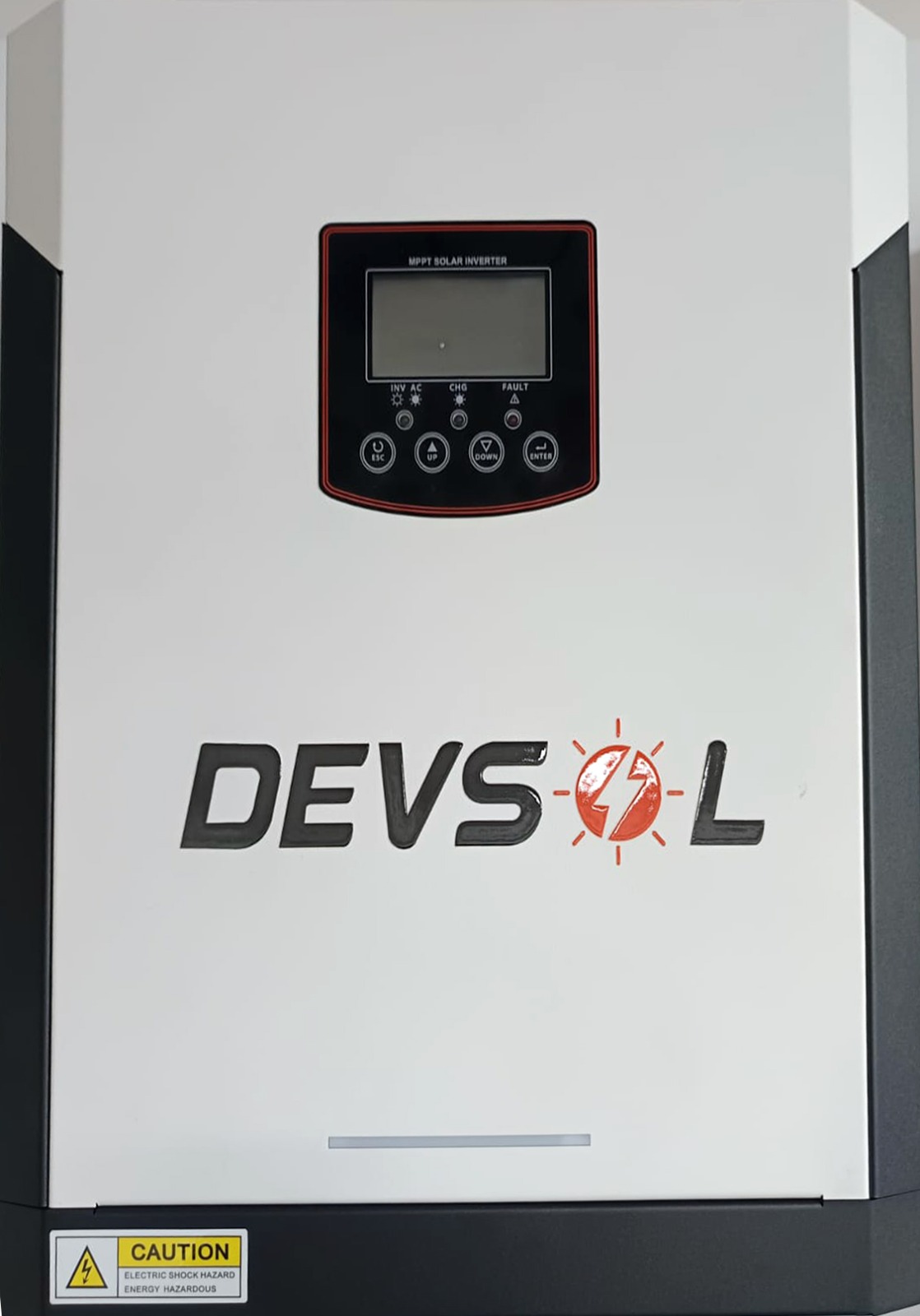
Description
Hybrid Solar Inverters: One System, Three Power Sources, Zero Guesswork
Power cuts don’t wait for a convenient time. Neither does your electricity bill. A hybrid solar inverter solves both problems with one box — pulling from solar, battery, and grid power automatically, so you’re never standing in the dark wondering which switch to flip.
How It Actually Works
The logic is simpler than it sounds. Solar runs your appliances first, since that’s the power you’re not paying for. Whatever’s left over tops up your battery. If you’ve got net metering enabled, any extra beyond that gets exported back to the grid.
Come nightfall, or the moment the power cuts out, the inverter just switches — no app to open, no manual override, no delay you’d even notice. It’s the kind of automation you only really appreciate the first time the lights stay on during a neighborhood-wide outage.
What’s Actually Inside
- Dual mode operation — works as an on-grid and off-grid inverter, so you’re not locked into one setup
- Pure sine wave output — safe for sensitive electronics, not just bulbs and fans
- Advanced MPPT technology — squeezes more usable power out of the same solar array
- Built-in battery management — charges efficiently without shortening battery life
- Grid export support — net metering compatible, where your local regulations allow it
- Real-time monitoring — check generation, battery level, and usage from your phone
- Zero-delay changeover — the backup kicks in before you notice the outage
Why People Actually Buy These
Lower bills get mentioned first, and fairly — using your own solar generation instead of grid power adds up fast. But the reason people keep talking about their hybrid inverter months later is usually the backup. Power stays on during cuts without you lifting a finger, and that reliability is worth more to most households than the savings alone.
There’s an independence angle too — less exposure to tariff hikes, less dependence on grid stability in your area. And since it’s solar-driven, you’re running cleaner power without changing a single habit.
Where These Get Installed
Homes and villas are the obvious fit, but apartments wanting real backup use them too. Past residential, we install these across offices, IT setups, clinics, schools, and small industrial units — anywhere continuous power actually matters to the people inside.
Sizing: What Capacity Do You Actually Need?
| Capacity | Best For |
|---|---|
| 3–5 kVA | Homes and small offices |
| 6–10 kVA | Larger homes, commercial spaces |
| 15 kVA+ | Industrial and high-load setups |
All capacities support lithium, tubular, or SMF batteries, so your battery choice doesn’t lock you into a specific inverter tier.
Built for Actual Indian Conditions
This isn’t lab-tested equipment hoping it survives the field. These inverters are built around frequent power cuts, voltage swings that would trip lesser hardware, and the kind of ambient heat that shortens the life of anything not designed for it.
Why Install Through Eco Solar Energy
A good inverter is only half the system — the install quality is the other half. We size the system to your actual load (not just your roof space), handle integration with your existing panels and batteries, and design for room to scale if your needs grow later. Every install comes with warranty backing and support that doesn’t disappear the day after commissioning.
Get in touch for a load assessment and a quote built around your actual home or business, not a generic size chart.

Reviews
There are no reviews yet.