
Best 4G Solar CCTV Camera vs WiFi: Which Should You Choose?
Choosing the best 4G solar CCTV camera isn’t really about finding one “winner” model. It’s about matching the connectivity type to your actual location. A camera that’s perfect for a farm gate can be the wrong choice for a home with strong WiFi.
This guide compares 4G and WiFi solar cameras directly. It covers real price ranges in India and explains how much mobile data a 4G model actually uses. By the end, you’ll know which type fits your property.
4G vs WiFi Solar CCTV Camera: The Core Difference
A WiFi solar camera connects to your home or office router, the same way a laptop does. It needs a strong signal reaching the exact mounting spot, which limits where you can place it.
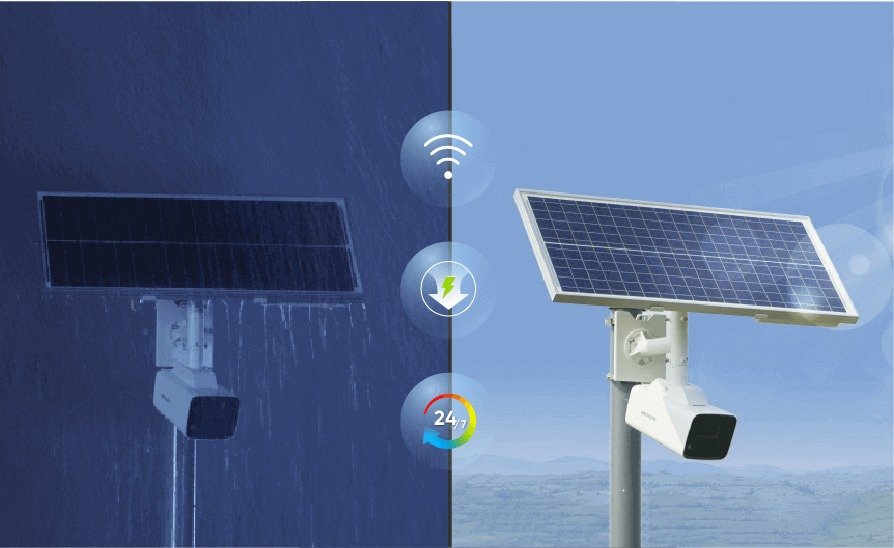
A 4G solar camera, on the other hand, uses a SIM card to connect through the mobile network instead. This works anywhere with cellular coverage, regardless of router range. As a result, 4G models dominate for farms, construction sites, and remote boundary walls.
Both types still rely on the same solar panel and battery setup underneath. The connectivity method is really the only structural difference. Everything else, from night vision to motion detection, works the same way across both.
What Actually Makes a 4G Solar CCTV Camera “The Best” One?
Megapixel count gets most of the marketing attention, but it’s rarely the deciding factor. Instead, focus on the features that determine real-world reliability:
- Battery backup of 2-3 days minimum without direct sunlight
- IP66 weatherproof rating for monsoon and dust protection
- Color night vision rather than basic infrared-only recording
- PTZ (pan-tilt-zoom) or 360° coverage for open outdoor areas
- Compatibility with Jio, Airtel, Vi, or BSNL SIM cards
- Local microSD storage as backup when the connection drops
A camera that scores well across these points will outperform a higher-megapixel model that’s weak on battery or weatherproofing. In fact, buyers often regret the megapixel-first decision once the first monsoon exposes a weak enclosure.
How Much Data Does a 4G Solar Camera Actually Use?
This question stops a lot of buyers before they commit to a SIM-based model. In practice, a regular 1GB to 1.5GB daily data plan covers normal motion-triggered monitoring for most households.
Motion-triggered clips use far less data than continuous recording. The camera only sends footage when it detects movement, rather than streaming around the clock. This is why daily usage stays modest even on a busy property.
Data use climbs if you frequently stream live video remotely, rather than just receiving motion alerts. Before committing to a plan, check TRAI’s mobile network information for coverage and data plans available from your carrier at the installation site.
When WiFi Still Makes More Sense
4G isn’t automatically the better choice everywhere. If your installation site already has strong, stable WiFi, a WiFi solar camera skips the recurring data plan cost entirely.
Signal reliability matters more than raw WiFi speed here. A weak or congested home network can cause more dropped footage than a decent 4G connection would. Before ruling out 4G, it’s worth testing your actual WiFi signal strength at the exact mounting location, not just inside the house.
Eco Solar Energy’s Recommendation
At Eco Solar Energy, we ask about your installation site before recommending a connectivity type, not the other way around. A farm boundary and a city home have very different needs, even if both want a solar camera.
For the full breakdown of how solar cameras work, including 360° coverage and weatherproofing, see our complete solar camera buying guide. Our team can also walk you through current pricing for your specific site.
FAQ
Is a 4G solar camera better than WiFi?
Not universally. A 4G model suits locations without reliable WiFi, while a WiFi model is cheaper and simpler when a strong network already reaches the site.
How much does a good 4G solar CCTV camera cost in India?
Reliable single-lens 4G models typically start around ₹3,500, while dual-lens or PTZ models range from ₹6,500 to ₹9,999.
Which SIM networks work with 4G solar cameras?
Most models support Jio, Airtel, Vi, and BSNL nano-SIM cards on 4G LTE networks, though it’s worth confirming compatibility before purchase.
Do 4G solar cameras work without a data plan?
They can record locally to a microSD card without one, but live viewing, remote alerts, and PTZ control all require an active data plan.
Get in Touch with Eco Solar Energy
📞 Call / WhatsApp: +91-9845916006
🌐 Visit: ecosolarenergy.in
📍 #17, 2nd Cross, Mysore Road, Near Satellite Bus Stand, Bangalore-560026