

What Is a Solar Camera? Complete Buying Guide
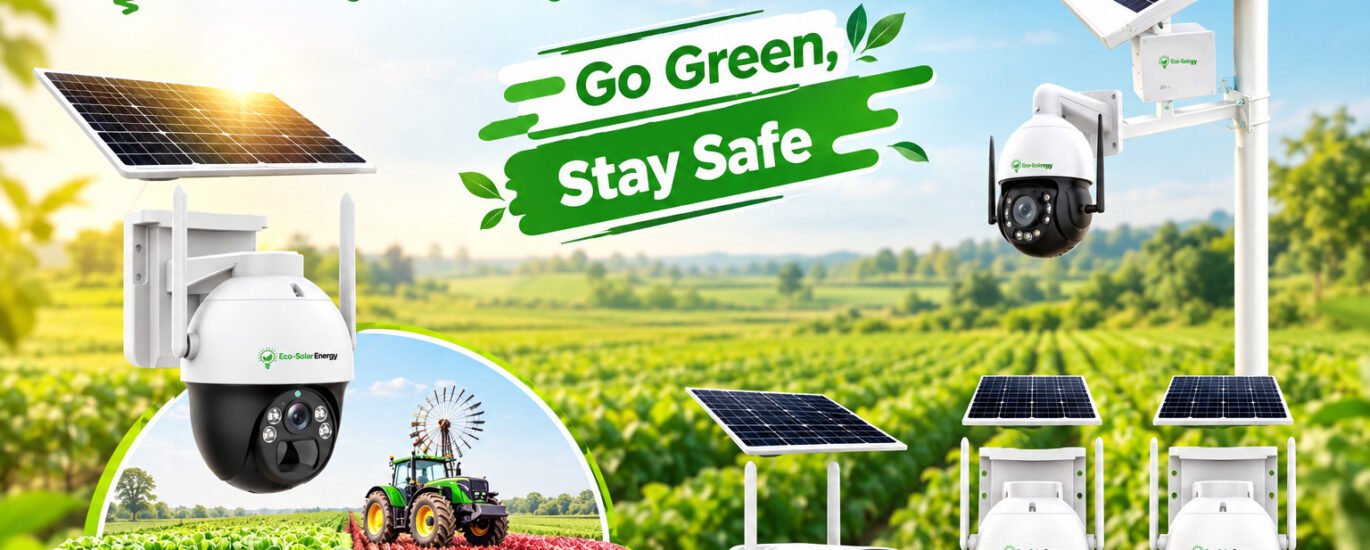
A solar camera runs entirely on sunlight, with no wiring or mains electricity needed. It pairs a small solar panel with a rechargeable battery inside a weatherproof camera body. This makes it ideal for gates, farms, warehouses, and remote outdoor locations across India.
This guide explains how a solar camera actually works, what SIM card and 360° options mean, and which features matter before you buy one. We’ll also cover where Eco Solar Energy’s solar CCTV range fits into these choices.
How Does a Camera Work?
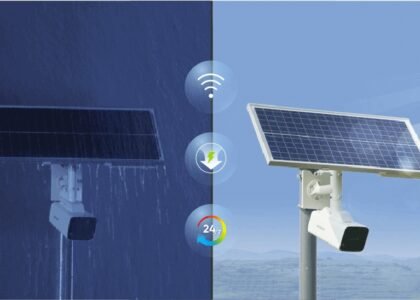
A small solar panel on top of the unit charges an internal battery during the day. That battery then powers the camera through the night and on cloudy days. Most models store two to three days of backup charge, so a few overcast days won’t cut the feed.
Unlike wired CCTV, there’s no cabling running back to a DVR or router. Instead, footage gets sent wirelessly, either over WiFi or a mobile network. Because of this, installation takes hours instead of days, since there’s no trenching or cable routing involved.
SIM Card vs WiFi Solar Cameras — Which Connectivity Do You Need?
This is the single biggest decision when buying a camera. A WiFi model needs a stable network signal at the camera’s exact location, which rules out most farms, warehouses, and remote gates.
Keep in mind that SIM card models need an active data plan, which adds a small recurring cost. Before choosing one, check TRAI’s mobile coverage map for your installation site, since signal strength varies by location and carrier.
Why 360° Coverage Matters for Outdoor Security
A fixed-lens camera only ever watches one direction. A 360° camera, by contrast, pans and rotates to cover the full area around it, cutting down blind spots significantly.
This matters most for open spaces like parking lots, farms, and warehouse yards, where a single fixed angle misses most of the property. Additionally, some 360° models auto-track movement, following a person or vehicle across the frame. As a result, one 360° camera often replaces two or three fixed cameras outdoors.
Key Features to Check Before Buying a Solar Camera
IP65 or IP66 weatherproof rating, essential for India’s monsoon and heat.
- Battery backup of at least 2-3 days without sunlight
- Night vision, ideally color night vision rather than basic infrared
- Motion detection with human or vehicle recognition, to cut false alerts
- App-based remote viewing from your phone
- SIM card slot if the installation site lacks reliable WiFi
Where Solar Cameras Work Best
- Farmhouses and agricultural land
- Warehouses and industrial yards
- Construction sites
- Boundary walls and gates without nearby power points
- Parking lots and open commercial spaces
Because these locations often lack both power and stable WiFi, solves two problems with one installation.
Solar Camera vs Traditional CCTV — Is It Worth Switching?
A solar camera skips both requirements entirely. Therefore, for remote or temporary sites, it’s usually faster and cheaper to install than running new cabling. That said, a wired system still makes sense for a permanent building with power already in place, especially at larger scale.
Running costs also differ significantly between the two. A wired system draws continuous grid power and often needs a paid cloud storage plan. A solar camera, by contrast, runs on free sunlight, with the only recurring cost being a data plan for SIM card models.
Eco Solar Energy’s Solar Camera Range
At Eco Solar Energy, our solar CCTV cameras are built for Bangalore’s climate and remote installation needs across Karnataka. Our 2-lens and 3-lens models cover different budgets and coverage needs, from single-direction monitoring to wide-angle, reduced-blind-spot setups.
For homeowners specifically comparing installation options in Bangalore, see our detailed guide to 2-lens solar camera installation. It covers setup, pricing, and coverage in more depth.
FAQ:
What is a solar camera?
A solar camera is a CCTV camera powered entirely by a built-in solar panel and battery, requiring no mains electricity or wiring to operate.
Does a solar camera work without WiFi?
Yes, if it has a SIM card slot. These models connect through the mobile network instead of WiFi, making them suitable for remote locations without internet access.
What does 360° mean in a solar camera?
It means the camera pans and rotates to cover a wide area, rather than staying fixed on one direction, which reduces blind spots.
How long does a solar camera work without sunlight?
Most models store two to three days of battery backup, so a few cloudy or rainy days typically won’t interrupt the feed.
Is a solar camera suitable for outdoor use in India’s climate?
Yes, provided it has an IP65 or IP66 weatherproof rating, which protects against monsoon rain, dust, and heat.
Get in Touch with Eco Solar Energy
📞 +91-9845916006
🌐 Visit: ecosolarenergy.in
📍 #17, 2nd Cross, Mysore Road, Near Satellite Bus Stand, Bangalore-560026