

Solar Fencing System for Farms: How It Works, Cost & Subsidy Guide
Wild boar tearing through a paddy field at 3am. A monkey troop that’s figured out exactly when the watchman goes for chai. If you farm anywhere near forest land in India, you already know the problem — and you’ve probably heard a neighbor mention solar fencing as the fix.
What Is a Solar Fence, Actually?
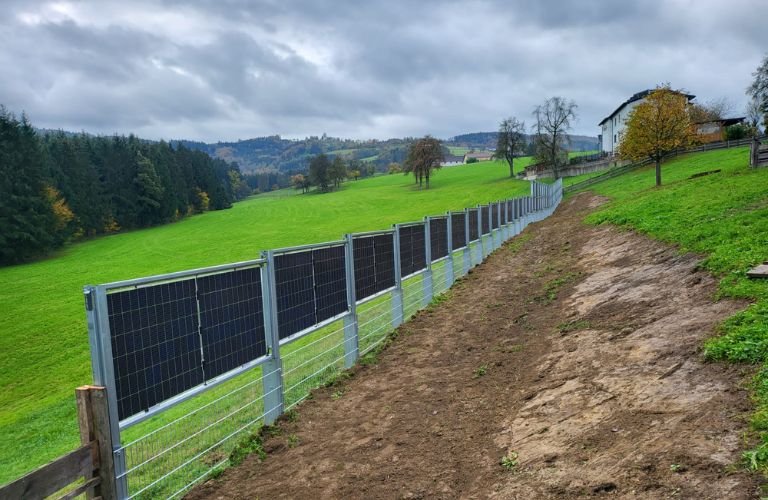
A solar fence is an electric fence that runs off a battery charged by a small solar panel instead of grid power. The energizer sends a short pulse through the wire — not a continuous current — which is what makes it non-lethal. An animal touches the wire, feels a jolt, and learns fast to stay away. No electricity bill, no wiring back to the house, and it works even where grid power barely reaches.
How a Solar Fence Energizer Works
The energizer is the brain of the whole setup. It’s not just a switch — it’s what converts stored battery power into that pulsed shock, timed precisely so it startles rather than injures. Solar panels top up the battery through the day; the energizer draws from that reserve around the clock, pulse after pulse, whether or not the sun’s out that particular afternoon.
Most systems pulse once every second or so. That’s frequent enough to deter an animal on first contact, but spaced out enough that the system barely sips power.
Solar Fencing for Agricultural Land: What It Actually Protects Against
Ask ten farmers what drove them to install one and you’ll hear the same handful of names. Wild boar. Monkeys. Nilgai. In some regions, elephants. Traditional barbed wire barely slows these down — a solar electric fence, on the other hand, teaches the animal to avoid the boundary entirely after one or two contacts.
It’s not just crops, either. A lot of installations now go in specifically for livestock — keeping goats, cattle, and poultry contained and keeping predators like jackals and stray dogs out.
Solar Fence Energizer Price: What to Actually Expect
Here’s where most people get surprised. Total cost per kilometer typically runs somewhere between ₹80,000 and ₹2,50,000, and that range genuinely does swing that wide — wire quality, energizer capacity, pole spacing, and terrain all move the number. A flat, open field costs far less to fence than uneven or forested land.
The energizer itself is only one piece of that number. Budget separately for poles, wire, insulators, and the battery — skimping on any one of these is usually what causes a system to underperform within the first year.
Is There a Subsidy for Solar Fencing in India?
Yes, and it’s worth checking before you buy anything. Many state agriculture, horticulture, and forest departments offer subsidies covering 30–50% of the cost, particularly for farmers in areas bordering forest land where wildlife conflict is common. The application usually runs through your state’s agriculture department portal or local office — it’s not automatic, so you do have to apply.
Solar Powered Electric Fence vs Traditional Fencing
A traditional fence is a barrier. A solar powered electric fence is a deterrent — the animal has to actually try crossing it once before it learns to stop trying. That’s a meaningfully different mechanism, and it’s why solar fencing tends to outperform barbed wire even when the barbed wire is physically taller or sturdier.
FAQ
What is a solar fencing system?
An electric fence powered by a solar panel and battery instead of grid electricity, delivering a short, non-lethal pulse to deter animals from crossing.
How much does a solar fence energizer cost in India?
Total system cost typically runs ₹80,000 to ₹2,50,000 per kilometer, depending on wire quality, energizer capacity, and terrain.
Is solar fencing safe for animals and humans?
Yes. The pulsed current is designed to startle, not injure — it’s a deterrent shock, not a continuous or lethal current.
Can I get a subsidy for solar fencing?
Many Indian states offer 30–50% subsidies through agriculture, horticulture, or forest departments, especially for farms near forest boundaries. Check with your local department office.
How long does a solar fence last?
A well-maintained system typically lasts 10–15 years, though the battery usually needs replacing every 3–5 years.
 Call / WhatsApp: +91-9845916006
 Visit: ecosolarenergy.in
 #17, 2nd Cross, Mysore Road, Near Satellite Bus Stand, Bangalore-560026