

Tata Nexon EV Charger Installation
Got a Nexon EV, or about to? The car comes with a portable charging cable, but most owners end up installing a dedicated wall charger within the first few months — and the installation side of that decision is where most of the confusion actually sits. Here’s what to know before setup.
Tata Nexon EV Charger: Choosing the Right One to Install
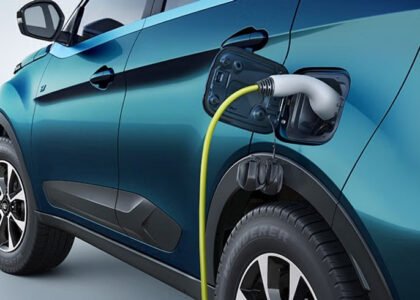
A “Nexon EV charger” usually means one of two things: the portable cable that ships with the car, or a dedicated AC wall box installed separately. The portable cable works off a 15A socket and gets the job done slowly. If you’re weighing capacities and features before deciding, our home EV charger guide breaks down the types available in India and what actually matters for a daily-driver EV.
When you’re comparing Nexon EV charger options for installation, the capacity rating matters more than the brand name on the box. A 7.2 kW unit charges meaningfully faster than a 3.3 kW one, but only if your home’s wiring and sanctioned load can actually support it — which is the first thing to check, not the last. For a broader look at how EV charging fits into a home’s overall electrical setup, Eco Solar Energy’s home solar installation guide for Bangalore homes covers load planning in more depth.
Tata Nexon EV Charging Time: What a Dedicated Install Changes
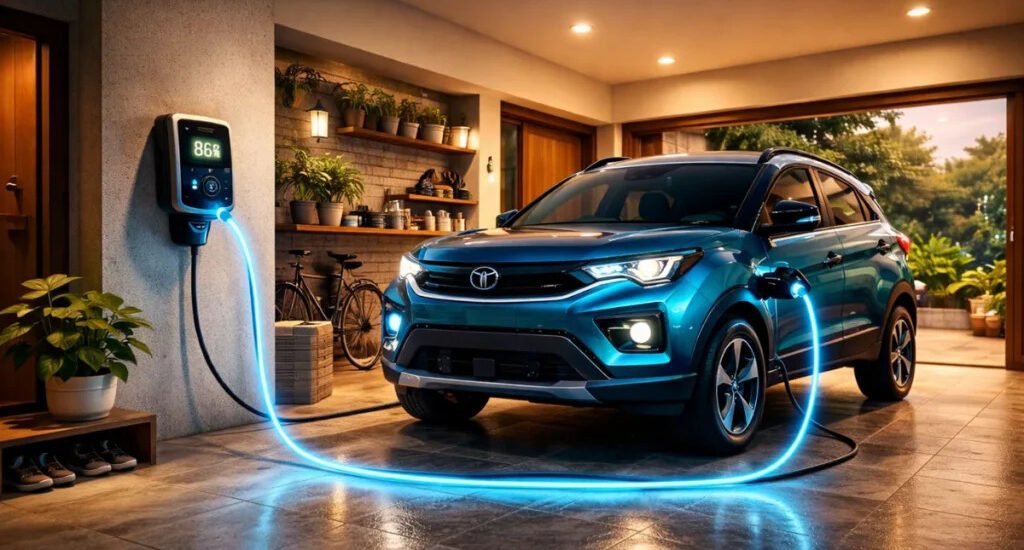
This is the part that makes the installation worth it. On the portable cable and a standard socket, a 10-100% charge takes around 17 hours, per the car’s own spec sheet. Install a 7.2 kW wall box instead, and that same charge drops to roughly 6 hours 36 minutes.
Tata Nexon EV charging time at home, in short: plug in after dinner on a dedicated charger, wake up to a full battery. On the stock cable, you’re looking at most of a day. For the full breakdown of charging-time numbers across both battery variants, see our Tata Nexon EV charging time and cost page.
Nexon EV One-Time Charging Cost and Full Charge Cost
Using Karnataka’s typical EV-household electricity rate of ₹10.7 per unit, a full 0-100% charge works out to roughly ₹480-₹500 for the 45 kWh Long Range battery, or ₹320-₹340 for the 30 kWh Medium Range variant. That’s the Nexon EV one-time charging cost for a single full top-up at home — not a monthly figure, just one charge.
If your home already has rooftop solar, part of that cost can come from your own generation instead of the grid. Our guide to charging an EV with home solar explains how on-grid and hybrid systems handle that differently, and it’s worth reading before you size your charger.
Tata Nexon EV Charging Cost Per Km
Dividing that cost across a realistic driving range works out to approximately ₹1.8-₹2 per km, depending on driving style and AC use. Over a month of regular driving, that’s the number that actually decides whether home charging is saving you money compared to fuel — and for most owners, it clearly does.
Tata Nexon EV Charging Time and Cost: Quick Summary
| Setup | 10-100% Charging Time | Full Charge Cost |
|---|---|---|
| 15A portable cable | ~17 hrs | ₹480-500 (45 kWh) |
| 7.2 kW wall charger | ~6 hrs 36 min | ₹480-500 (45 kWh) |
| DC fast charge (60 kW) | ~40 min | Pricing varies by station |
Installing Your Nexon EV Charger: What Actually Happens
This process follows the government’s own EV charging infrastructure guidelines, which set the safety and connection standards every home installer is expected to follow. If you’d rather not handle the paperwork yourself, that’s the part installers typically take off your hands — our EV charger installation service in Bangalore covers the wiring and the BESCOM documentation together.
Backup Power While You Charge
A home charger draws a steady load for hours at a stretch, so it’s worth knowing what happens if BESCOM cuts out mid-charge. A standard on-grid solar setup shuts down during an outage for safety reasons, but pairing your home with battery energy storage or a smart home UPS and inverter backup keeps essentials running, charger included, until supply resumes.
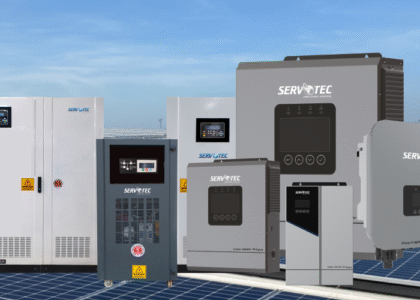
If you’re installing solar alongside your EV charger, a hybrid solar inverter is usually the piece that ties the two together, since it manages solar generation, battery backup, and grid draw in one unit. Our solar inverter guide for India explains how inverter sizing changes once you add EV charging to a home’s regular load.
Financing the Setup
Installing a charger is rarely a standalone decision — most people are also evaluating rooftop solar around the same time. If that’s the case for you, the PM Surya Ghar Yojana subsidy and loan options for Bangalore homes are worth checking before you finalise either installation, since combining both under one project can change the numbers.
Get It Installed in Bangalore
Eco Solar Energy installs home EV chargers across Bangalore and handles the BESCOM documentation as part of the job. We’ll check your home’s wiring and, if you’re interested, your solar panel installation options at the same time, before you install anything.
 Call / WhatsApp: +91-9845916006
 Visit: ecosolarenergy.in
 #17, 2nd Cross,