
What Is SPD in Solar? A Simple Guide to Surge Protection for Solar Systems
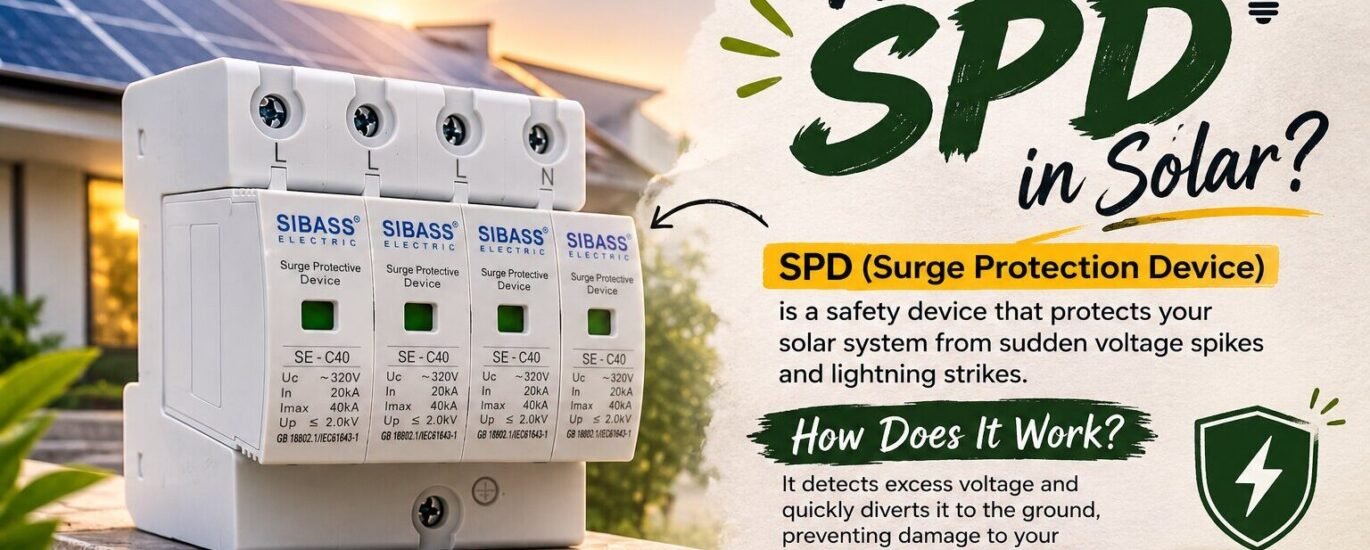
An SPD, or surge protection device, is a safety part that diverts sudden voltage spikes away from your solar equipment. In a solar system, it protects the inverter, panels and wiring from lightning and switching surges. This guide explains where to fit one, which type to pick and how to choose it. We install and supply solar systems across Bangalore at Eco Solar Energy.
What Is an SPD in a Solar System?
An SPD in solar systems sits between your equipment and the surge. When a spike arrives, it sends the extra energy to the earth, so the inverter never sees it. Then it goes back to waiting.
You can buy it as a standalone device. See our surge protection device (SPD) product page for what we supply.
Why Does a Solar System Need an SPD in Solar Wiring?
Inverters contain delicate electronics, and one surge can damage them. India sees frequent lightning, and the National Disaster Management Authority publishes lightning safety guidance. An SPD costs far less than a damaged inverter. You can also follow storm alerts from the India Meteorological Department.
Type 1 vs Type 2 SPD for Solar
Type 2 is the usual choice for solar. It handles the surges that travel along wires and protects the inverter. Type 1 handles much larger lightning currents and suits buildings with an external lightning protection system.
Your installer should choose between them after looking at the site, the roof and the lightning risk.
How to Select an SPD for a Solar System
Check these points before you buy an SPD for solar use:
- Voltage rating. It must suit your maximum DC array voltage, with a safe margin.
- Protection level. It should keep the surge below what your inverter can take. The inverter’s manual lists this.
- Discharge current. A higher kA rating suits areas with more lightning.
- IP rating. Outdoor boxes need better weather protection than indoor ones.
- Earthing type and poles. Match the SPD to your earthing system.
- Status indicator. A window or contact tells you when to replace it.
Good devices follow the IEC 61643 series of standards, which you can look up on the IEC site. In India, the Bureau of Indian Standards sets the national standards. [ADD THE RATINGS OF YOUR SPD: voltage, kA, protection level, IP.]
Earthing Matters as Much as the SPD
An SPD can only send a surge to the ground if the earth connection is good. Poor earthing leaves the surge nowhere to go. So plan the SPD and the earthing together.
See our chemical earthing kit and copper earthing kit for the options we offer.
How to Maintain a Solar SPD
- Look at the status window regularly. Green usually means normal.
- Replace the module when the window changes colour.
- Check the terminals and the earth wire for tightness.
- Inspect it after any nearby lightning strike.
SPDs wear out as they absorb surges, so they are not fit-and-forget parts.
SPD Price and Installation
The price depends on the type, voltage rating, kA rating and brand. We do not list one number here, because a quote should match your system. Ask for it with your solar panel installation plan, and see our inverter range and hybrid solar inverters to size the protection.
Planning a new system? Read our guides to on-grid vs off-grid solar and home solar installation in Bangalore, and see the best hybrid solar inverter for your home.
Get SPD Protection from Eco Solar Energy
Tell us your system size, inverter and roof layout. We will suggest the right SPDs and earthing, and fit them. For funding support, see our rooftop solar subsidy and loan guide, or contact Eco Solar Energy for a quote. You can also check scheme details with the Ministry of New and Renewable Energy.
FAQ
What is SPD in solar?
SPD stands for surge protection device. In a solar system, it diverts sudden voltage spikes away from the inverter, panels and wiring so they are not damaged.
Is an SPD necessary in a solar system?
It is strongly recommended. Surges from lightning and grid switching can damage inverter electronics, so most installers fit SPDs as standard. Ask your installer and your electricity company about local requirements.
What is the difference between a DC SPD and an AC SPD?
A DC SPD protects the panel side of the system and is rated for DC voltage. An AC SPD protects the inverter output and the main board and is rated for the AC supply. They are not interchangeable.
Which SPD type is used for solar: Type 1 or Type 2?
Type 2 is the most common choice for solar systems. Type 1 is used where lightning currents are higher, such as buildings with an external lightning protection system.
Where is an SPD installed in a solar system?
A DC SPD sits close to the inverter’s DC input, or at the combiner box. An AC SPD sits at the inverter’s AC output or the main distribution board.
Eco Solar Energy
#17, 2nd Cross, Mysore Road, Near Satellite Bus Stand, Bangalore-560026
Call / WhatsApp: +91-9845916006
Email: info@ecosolarenergy.in
Website: ecosolarenergy.in